Building Teams, Products, and Research Programs
Some people see things as they are and ask why. I dream of things that never were and ask why not.
— George Bernard Shaw
- Build research labs, technical infrastructure, and specialized teams to meet customer and market needs
- Partner with PMs, Researchers, Designers, and Engineers to create research programs for complex, high-revenue platforms
- Solve the methodological, technical, and innovation challenges no one else can
- Anticipate where the research market is heading and build solutions before they’re needed
- Go deep across products, audiences, methods, and every stage of product development
This has been my role over the past 17 years as co-founder of URI.
Building Teams
At URI, I built specialized teams from scratch: Cloud Research, Quantitative Research, AR/VR Research, Cloud Operations, IT & Security, Labs and Facilities, and Product Development.
How I Built Them
Building a team from scratch typically meant adding a junior resource early on to take over lower-level tasks. For example, when managing research labs and IT resources got to be too much, I cross-trained a receptionist to take on basic lab setup and reset tasks. We then hired an FTE who was a job switcher: eager but with no real experience. I trained him from scratch. Both of those individuals rose to much higher levels in the company because they were always ready and eager to do what it took to support growth.
Most of the first hires into each team required me to train them in every aspect of the work through direct instruction.
The harder hires were senior roles where we needed people to manage a team already in flight, but the team didn’t look like any team in any other company. For example, our Quant team worked across a very broad array of consumer and highly technical products, conducting all manner of market research and UX research studies. Most people have experience in a narrow slice of products and methods. We worked on anything and everything.
What the Quant Team Did
As an example of the breadth: our Quant team executed market sizing, market segmentation, conjoint analysis, Kano studies, A/B testing, trackers, and more. They worked with consumer audiences, data professional audiences, DevOps audiences, low vision audiences, the list goes on. We conducted research in more than 60 countries and executed hundreds of studies, some cookie-cutter, many completely custom.
The Hardest Team: Product
The hardest team to build was the Panel Pro product team. Everyone was 1-of-1 at first (first developer, first designer, first PM), and many people were performing multiple roles, with me filling in all the gaps. I started with an enterprise research and development mindset, but had to adjust to the reality of an incubation startup team.
It gave me an ever deeper appreciation of product development. So much of what you see in a finished product doesn’t communicate the time and thought behind each feature and design choice, or the effort put into researching market fit, stakeholder communication, GTM strategy, and on and on. I have designed and architected products in the past, but having responsibility for every aspect of the product and product strategy myself was “enlightening” to say the least.
Building Products
Panel Pro
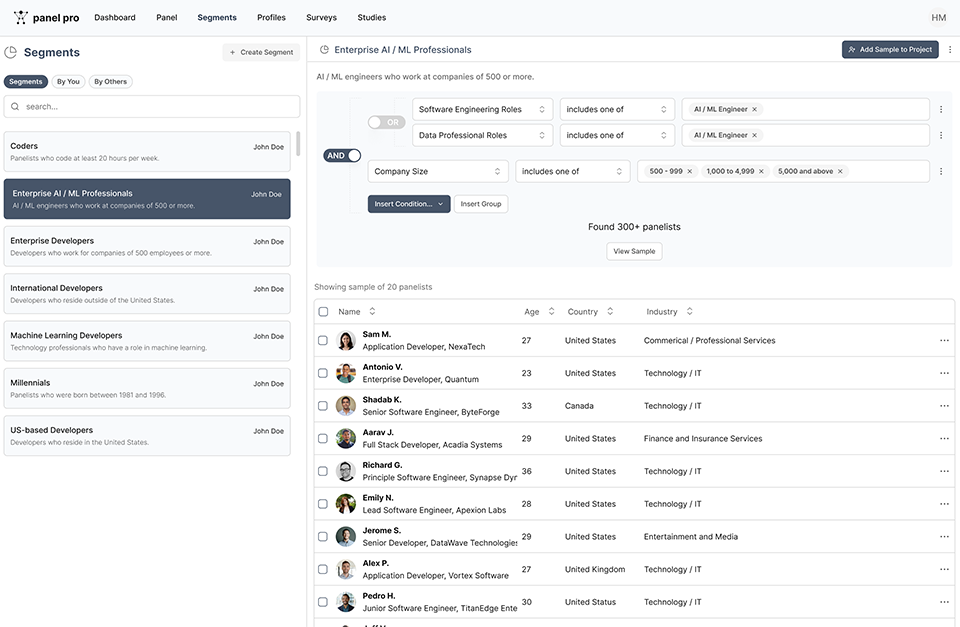
Third-party research panels are plagued by low-quality participants, fraud, poor targeting, and time-consuming screening. When you’re running enterprise UX research for platforms like Azure or Google Cloud, you need participants who actually use these products professionally, not people gaming screeners for gift cards.
We faced this problem on every project. So we built the solution: Panel Pro, a self-service research platform with pre-screened, identity-verified, and employment-verified business application users and tech professionals. Researchers can launch studies against participants profiled across 1,500+ attributes without lengthy screening processes.
Contactless Labs
When COVID shut down in-person research across the industry, the consensus was to wait it out. But you can’t test hardware remotely. Companies were considering flying prototypes to New Zealand because they had zero COVID cases.
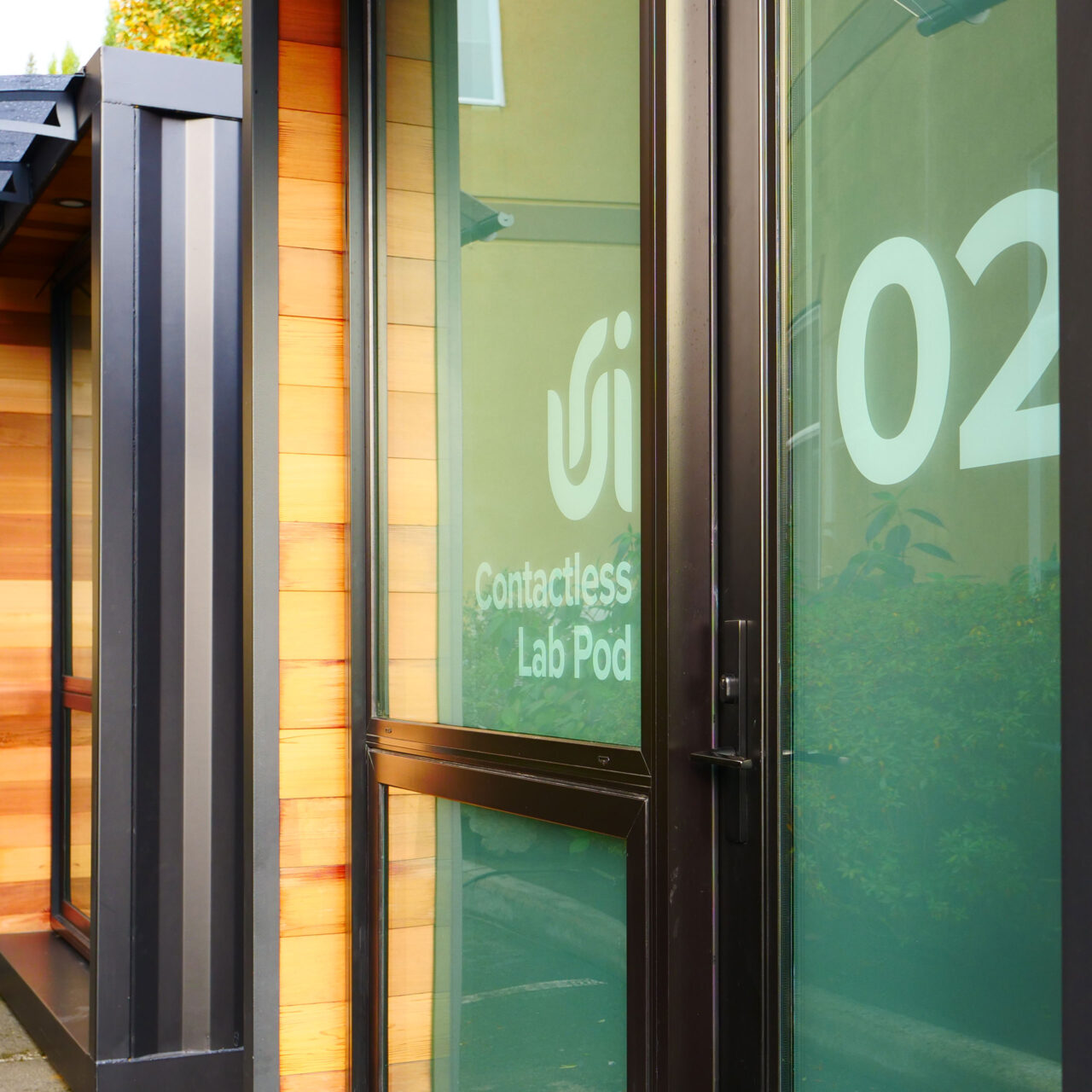
I decided to build a solution: Contactless Lab Pods, NSF-certified single-occupant clean rooms with HEPA filtration, UV-C sterilization, and remote moderation. While competitors paused, we grew our hardware testing client base. Constraint became competitive advantage.
Technical Benchmarking Infrastructure
I developed a process to set up and configure environments to test any type of SaaS or IaaS service, including complex ML and AI infrastructure. I then scaled it by building a technical cloud infrastructure team. This is covered in more depth in UX Benchmarking of Highly Technical Products.
The Thread
One philosophy drove everything: if we had a problem, chances were that our clients faced the same issues. So every internal solution became a new product or service.
We built our own labs, and offered them to our clients for rental. Eventually, we built labs for our clients in their facilities.
We built our own research panel so we didn’t have to rely on vendors and could better control quality. We became a panel provider for our clients.
We built our own panel management application because we couldn’t find a platform that gave us the capabilities we needed. Eventually we built Panel Pro to provide our clients with self-service participant sourcing options directly from our panel.
Each started as an internal need and became a competitive advantage.
What’s Next
Anyone who stops learning is old, whether at twenty or eighty. Anyone who keeps learning stays young.
— Henry Ford
After 17 years building URI (from 2 to 100+ employees, serving 7 of the world’s 10 largest tech companies), six years after the company took on Private Equity control (probably not the best catalyst for long term innovation!), and on the cusp of AI and automation reframing everything in the tech space, I decided it was time to make a change. I wanted to choose a path for new learning and growth.
You need to believe in what you’re doing and in the people you’re doing it with. If you don’t wake up every morning motivated by the work, the team, and the opportunities ahead of you, you won’t achieve your potential.
Since leaving URI, I’ve been more excited about waking up and working hard every day than I have in some time. There are no guarantees that what I do will be rewarded. But I’m doing work I believe is needed and necessary, and not doing it has never been an option for me.